
The Complete 2026 Software Developer Roadmap: From Complete Beginner to Your First Job. An honest, practical guide to becoming a software developer in 2026—even if you’re starting with zero experience. A few years ago, learning to code meant spending hours searching documentation, watching tutorials, and struggling through bugs alone. In 2026, things look very different. AI tools can explain code, generate boilerplate, find bugs, and help you learn faster than ever before. At the same time, many beginners are asking the same question:
If AI can write code, is software development still worth learning?
After speaking with developers, recruiters, hiring managers, and self-taught engineers, the answer remains clear: yes—but the path has changed. Companies are not hiring people simply because they know a programming language. They’re hiring people who can solve problems, build useful software, collaborate effectively, and use modern tools efficiently. That’s good news for beginners. You no longer need a computer science degree from a top university to break into tech. Thousands of developers have landed jobs through self-study, project-based learning, internships, freelancing, and open-source contributions.
This guide outlines a realistic software developer roadmap for 2026, including what to learn, what to ignore, and how to position yourself for your first developer role.
Table of Contents
- Why Software Development Remains a Strong Career in 2026
- Learn Programming Fundamentals First
- Build a Foundation in Computer Science
- Choose a Development Path
- Learn Modern Web Development
- Master Git and Professional Workflows
- Understand Databases
- Use AI as a Learning Accelerator
- Learn Data Structures and Algorithms
- Build Projects That Impress Employers
- Learn Cloud and Deployment Basics
- Create a Portfolio That Gets Attention
- Prepare for Technical Interviews
- Common Mistakes That Slow Progress
- Frequently Asked Questions
- Final Thoughts
Why Software Development Remains a Strong Career in 2026
Every few years, someone predicts the end of programming careers.
First it was no-code tools.
Then low-code platforms.
Now it’s AI.
Yet software continues to expand into nearly every part of daily life. Businesses need websites, mobile apps, internal tools, automation systems, AI integrations, payment systems, dashboards, and cloud infrastructure.
What has changed is the developer’s role.
Instead of spending hours writing repetitive code, developers increasingly focus on:
- Problem solving
- System design
- Product thinking
- Reviewing AI-generated code
- Understanding business requirements
- Improving user experiences
The developers who thrive in 2026 aren’t competing against AI. They’re learning how to use it effectively.
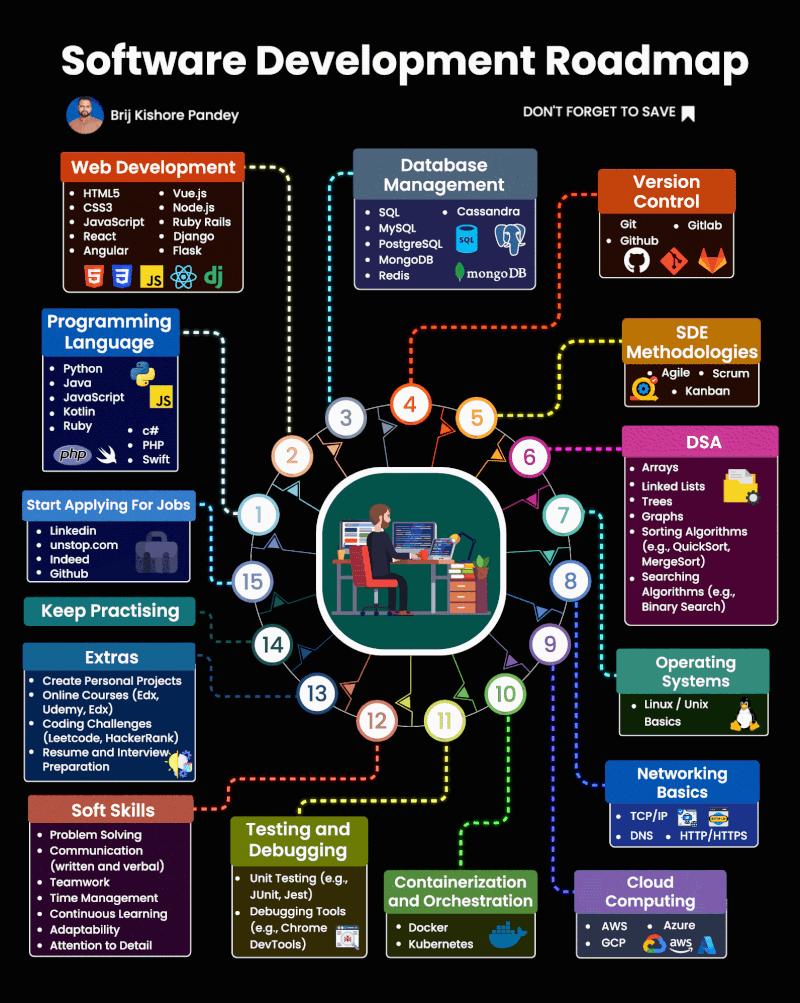
Step 1: Learn Programming Fundamentals First
Many beginners make the mistake of jumping straight into frameworks like React, Next.js, or Flutter. That’s like trying to drive a race car before learning how to steer.
Start with programming fundamentals.
Choose One Language
You don’t need three languages. You need one.
Python
Python remains one of the most beginner-friendly languages available.
It’s widely used in:
- Artificial intelligence
- Automation
- Web development
- Data analysis
- Scripting
JavaScript
If your goal is web development, JavaScript is difficult to avoid.
It powers:
- Interactive websites
- Front-end applications
- Back-end services through Node.js
- Modern web frameworks
For most aspiring web developers, JavaScript is often the best first choice.
Core Concepts Every Beginner Must Learn
Before moving forward, become comfortable with:
- Variables
- Data types
- Functions
- Arrays
- Objects
- Loops
- Conditional statements
- Error handling
A common mistake is believing you’ve learned these concepts because you’ve watched videos about them. Real learning happens when you build something yourself.
Try creating:
- A calculator
- A number guessing game
- A task tracker
- A budgeting tool
Small projects expose gaps in your understanding far better than tutorials.
Step 2: Build a Foundation in Computer Science
One pattern appears repeatedly among self-taught developers. They become productive quickly but struggle during technical interviews. The reason is usually the same: Missing computer science fundamentals. You don’t need a four-year degree, but you do need to understand how software works under the hood.
Learn Data Structures
Start with:
- Arrays
- Linked Lists
- Stacks
- Queues
- Hash Tables
- Trees
These structures appear everywhere, even when you don’t realize it.
For example:
When you search for a contact in your phone, store user data in a database, or navigate a website menu, data structures are working behind the scenes.
Learn Algorithms
Focus on understanding:
- Searching
- Sorting
- Recursion
- Traversal techniques
- Problem-solving strategies
Don’t memorize solutions. Understand why solutions work. That understanding stays valuable long after specific interview questions are forgotten.
Understand Time Complexity
At some point you’ll hear developers discussing Big O notation. Don’t panic. You don’t need advanced mathematics. You simply need to understand how different solutions scale as data grows.
Step 3: Choose a Development Path
One reason beginners feel overwhelmed is because software development is a huge field. Trying to learn everything at once is a recipe for frustration.
Instead, choose a direction.
Front-End Developer
Focus on:
- HTML
- CSS
- JavaScript
- React
- Next.js
Ideal for people who enjoy design and user interfaces.
Back-End Developer
Focus on:
- APIs
- Databases
- Authentication
- Server-side logic
Popular technologies include:
- Node.js
- Python
- Java
- .NET
Full Stack Developer
A full stack developer works with both front-end and back-end technologies. This path often provides the broadest opportunities for beginners and startups.
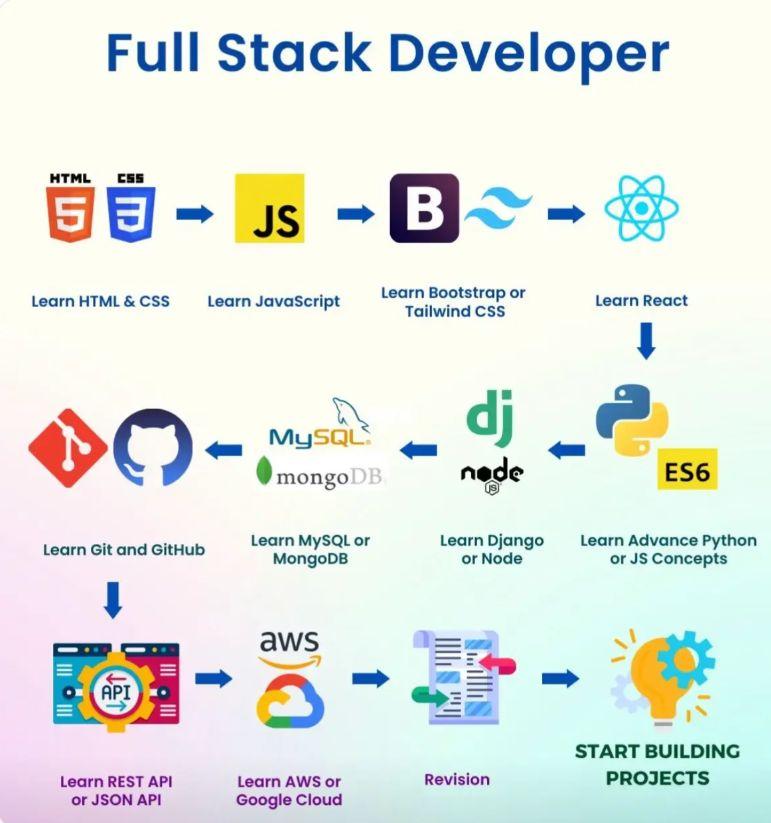
Step 4: Learn Modern Web Development
If you’re wondering how to become a web developer in 2026, this is where things become exciting. Modern web applications combine multiple technologies working together.
A practical learning sequence looks like this:
Front End
- HTML
- CSS
- JavaScript
- React
- Next.js
Back End
- Node.js or Python
- REST APIs
- Authentication systems
- File uploads
- Security basics
Databases
- PostgreSQL
- MySQL
- MongoDB
As you learn each piece, build projects around it. Projects create understanding. Tutorials create familiarity. Those are not the same thing.
Step 5: Master Git and Professional Workflows
Git is one of the most valuable skills beginners overlook. Every professional development team uses version control.
Learn how to:
- Create repositories
- Commit changes
- Create branches
- Merge code
- Resolve conflicts
- Open pull requests
A developer who understands Git can contribute to real projects much sooner.
Step 6: Understand Databases
Nearly every useful application stores information. Whether it’s customer accounts, orders, blog posts, messages, or inventory, that data needs a home.
Learn SQL First
Start with:
- PostgreSQL
- MySQL
Understand:
- Tables
- Relationships
- Queries
- Indexes
- Joins
SQL remains one of the most useful skills in software development.
Learn a NoSQL Database
After SQL, explore:
- MongoDB
- Firebase
Understanding both approaches helps you make better architectural decisions later.
Step 7: Use AI as a Learning Accelerator
One of the biggest advantages new developers have in 2026 is access to AI-assisted development tools.
Popular options include:
- GitHub Copilot
- Claude Code
- Cursor
- ChatGPT
Used properly, these tools can dramatically accelerate learning.
The Right Way to Use AI
Ask AI to:
- Explain concepts
- Review code
- Suggest improvements
- Identify bugs
- Generate practice exercises
Avoid using AI as a replacement for thinking. Many interviewers can quickly identify candidates who copied code without understanding it. A simple rule works well:
If you can’t explain it, you don’t really know it.
Step 8: Learn Data Structures and Algorithms (DSA)
Even in 2026, many companies continue using DSA-based interviews. Fortunately, you don’t need to solve hundreds of advanced problems.
Focus on mastering:
- Arrays
- Strings
- Hash Maps
- Binary Search
- Sliding Window
- Trees
- Graph Basics
Consistency matters more than intensity. Solving one problem daily for six months typically produces better results than cramming before interviews.
Step 9: Build Projects That Solve Real Problems
Projects are often the strongest proof of your skills. Recruiters rarely care how many courses you’ve completed. They care what you’ve built.
Beginner Projects
- Expense Tracker
- Calculator
- Habit Tracker
- Weather Dashboard
Intermediate Projects
- Blog Platform
- Task Management System
- Event Booking Application
- Personal Finance Dashboard
Advanced Projects
- E-commerce Platform
- AI Productivity Tool
- Team Collaboration Software
- SaaS Subscription Application
A Project That Gets Attention
One self-taught developer built a local business management platform for a family-owned shop. The code wasn’t perfect. The design wasn’t revolutionary. But it solved a real problem. That project generated more interview discussions than every tutorial certificate combined. Real-world usefulness often beats complexity.
Step 10: Learn Cloud and Deployment Basics
Building software is only half the job. Deploying it matters too. Many junior developers stand out simply because they know how to put applications online.
Learn Docker
Docker allows applications to run consistently across different environments. It’s widely used throughout the industry.
Learn Basic Cloud Concepts
Focus on:
- AWS EC2
- AWS S3
- AWS RDS
- Serverless functions
You don’t need cloud certifications to start. Understanding deployment fundamentals is enough.
Learn CI/CD
Continuous Integration and Continuous Deployment automate software releases.
Tools worth exploring include:
- GitHub Actions
- GitLab CI/CD
Even basic knowledge demonstrates professional maturity.
Step 11: Create a Portfolio That Employers Actually Read
Your portfolio should answer one question:
Why should someone hire you?
Include:
- Three to five polished projects
- GitHub profile
- Project screenshots
- Live demos
- Brief project explanations
Avoid filling your portfolio with unfinished experiments. Quality consistently beats quantity.
Step 12: Prepare for Entry-Level Software Developer Jobs in 2026
Once you’ve built projects and gained confidence, start applying. Not later.
Now.
Many beginners delay applications because they don’t feel ready. Most developers never feel completely ready.
Resume Tips
Focus on:
- Projects
- Technical skills
- Internships
- Freelance work
- Open-source contributions
Keep it concise and results-focused.
Build a LinkedIn Presence
Recruiters actively search for developers online.
Share:
- Projects
- Learning milestones
- Technical insights
- Open-source contributions
Visibility creates opportunities.
Network with Other Developers
Opportunities often come from conversations rather than applications.
Consider:
- Hackathons
- Developer communities
- Open-source projects
- Local tech meetups
Networking isn’t about asking for jobs.
It’s about building relationships.
Common Mistakes That Slow Progress
Many aspiring developers waste months making the same mistakes.
Tutorial Addiction
Watching content feels productive.
Building things is productive.
Constantly Switching Technologies
Stick with one roadmap long enough to become competent.
Ignoring Fundamentals
Frameworks evolve rapidly.
Fundamentals remain relevant for decades.
Avoiding Job Applications
You don’t need to know everything before applying.
No developer does.
Depending Entirely on AI
AI should support learning, not replace it.
Frequently Asked Questions
How can I become a software engineer without a degree in 2026?
Build practical skills, create strong projects, learn fundamentals, contribute to open-source software, and develop a professional portfolio. Many employers now prioritize demonstrated ability over formal credentials.
Is software development still a good career in 2026?
Yes. Demand remains strong across industries, especially for developers who can combine technical skills with AI-assisted workflows and problem-solving abilities.
How long does it take to become job-ready?
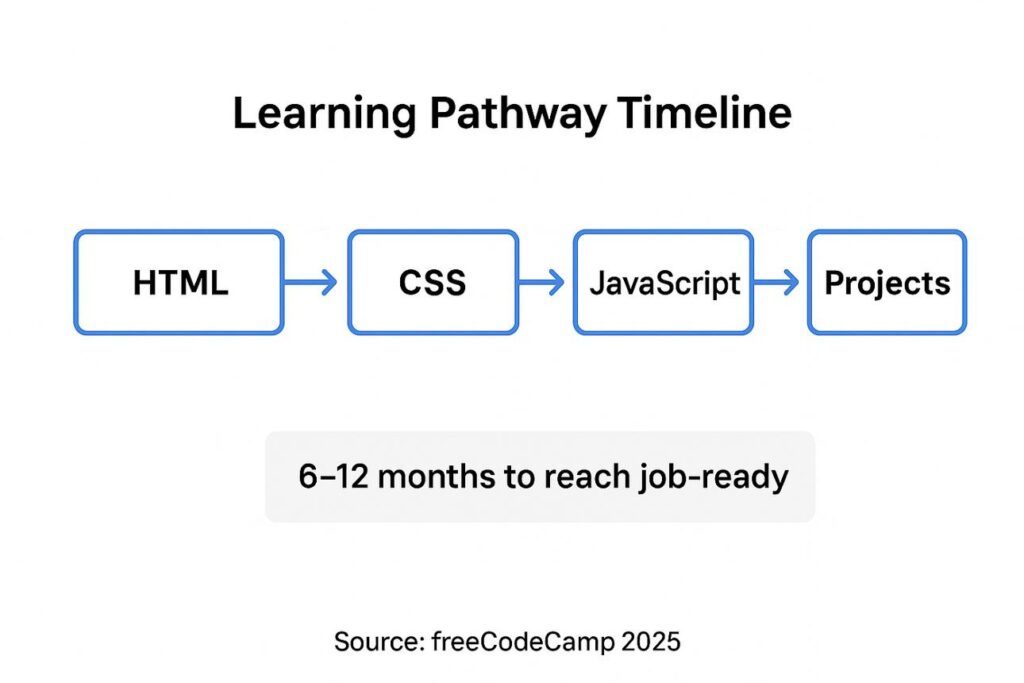
For most people studying consistently, it takes approximately 12 to 18 months to become competitive for entry-level software developer jobs.
Should I learn Python or JavaScript first?
Choose Python if you’re interested in AI, automation, or data-related work. Choose JavaScript if your primary goal is web development.
Are AI tools replacing junior developers?
Not directly. AI is automating repetitive coding tasks, but companies still need developers who understand systems, requirements, architecture, and user needs.
Final Thoughts
The best software developer roadmap in 2026 isn’t about mastering every framework, collecting dozens of certificates, or chasing the latest trend on social media.
It’s about developing real skills.
Learn one language well. Understand computer science fundamentals. Build projects that solve genuine problems. Use AI wisely. Learn modern development workflows. Put your work in front of employers.
Most importantly, stay consistent.
Software development rewards persistence more than raw talent.
A year from now, the difference between someone who spent twelve months building projects and someone who spent twelve months watching tutorials will be enormous.
Start small. Keep building. Keep learning.
Your first developer job is likely much closer than you think.
I’m Terrible at Math: Can I Still Become a Web Developer? – knowabteverything
About Amish
Hi, I’m Amish, and developer.
I write practical React Native, Node.js, MongoDB, and Supabase tutorials based on real projects and testing.
[…] Read about The Complete 2026 Software Developer Roadmap: From Complete Beginner to Your First Job – knowa… […]
[…] Read about The Complete 2026 Software Developer Roadmap: From Complete Beginner to Your First Job – knowa… […]