
How Often Should You Water Indoor Plants During an Indian Summer? A Practical Guide for Healthy Houseplants. Wondering why your indoor plant looks unhappy even though you’re watering it regularly? The answer might not be a lack of water—it could be too much.
Indian summers can be brutal. In many cities, temperatures regularly climb above 40°C, and even indoor spaces become warmer and drier than usual. During this season, many plant owners assume their plants need water every day. That’s often the biggest mistake they make.
Over the years, I’ve noticed that most indoor plant problems during summer don’t come from underwatering—they come from watering without checking the soil first.
This guide will help you understand exactly how often to water indoor plants during an Indian summer, how to recognize watering mistakes, and what simple adjustments can keep your plants thriving through the hottest months of the year.
Table of Contents
- Why Summer Changes Your Plant’s Water Needs
- How Often Should You Water Indoor Plants in Summer?
- What Determines Watering Frequency?
- The Finger Test: A Better Method Than Following a Schedule
- Signs of Overwatering vs Underwatering
- A Simple Summer Watering Routine
- Summer Indoor Plant Care Tips for Indian Homes
- Common Watering Mistakes That Kill Indoor Plants
- Real-Life Examples
- Frequently Asked Questions
- Final Takeaway
Why Summer Changes Your Plant’s Water Needs
Plants lose water through a natural process called transpiration. During hot weather, this process speeds up.
At the same time, higher temperatures cause potting soil to dry faster. Add ceiling fans, coolers, or air conditioners to the mix, and moisture disappears even more quickly.
But here’s the important part:
Hot weather doesn’t automatically mean you should water more often.
Different plants respond differently to heat. A Peace Lily may become thirsty within a few days, while a Snake Plant can stay perfectly healthy for two weeks without additional water.
That’s why understanding your plant matters more than following a fixed schedule.
How Often Should You Water Indoor Plants in Summer?
Quick Answer
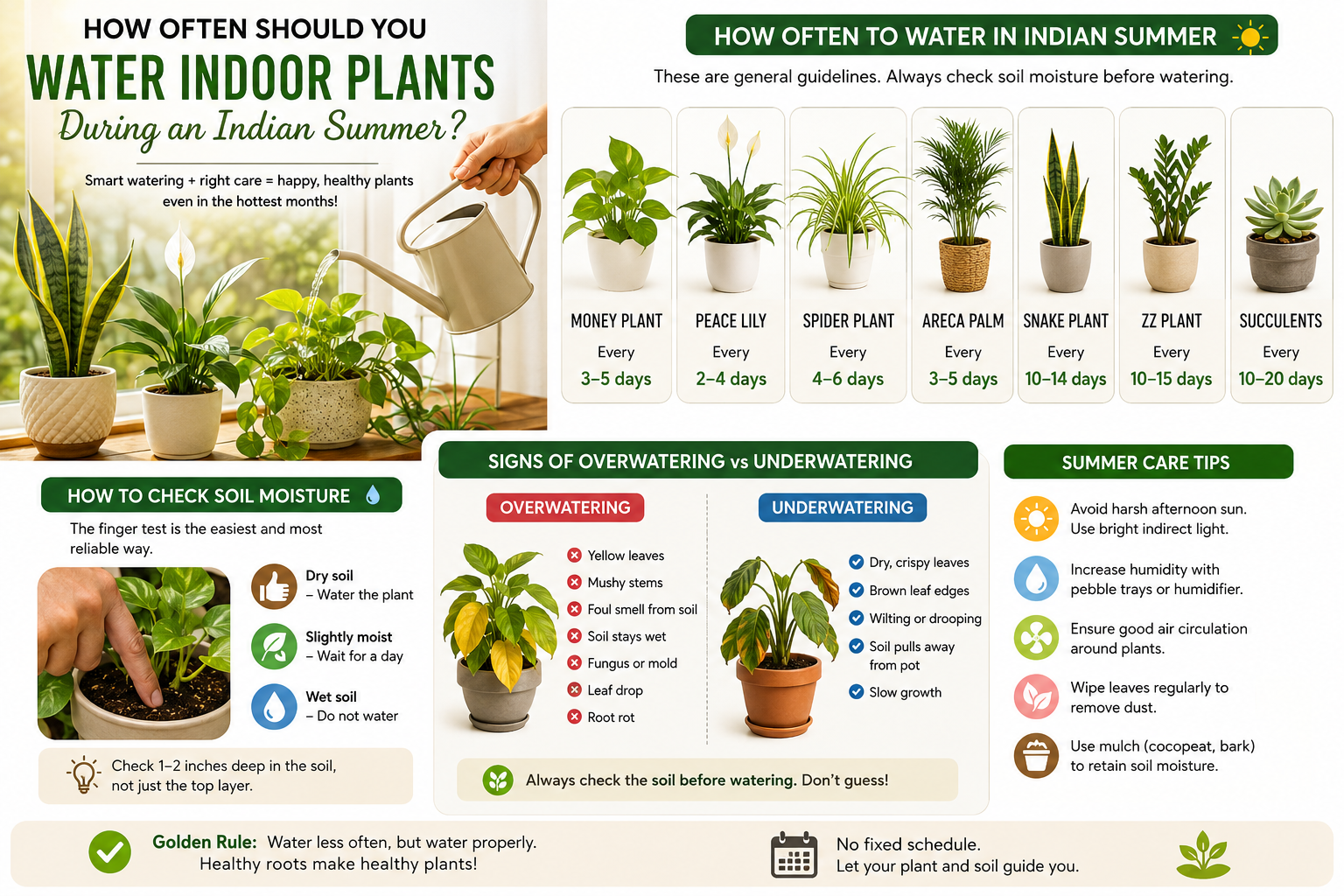
Most indoor plants in Indian homes need watering every 3 to 7 days during summer.
However, there is no universal rule.
A money plant placed near a sunny balcony in Patna may need water twice as often as the same plant kept in a cooler bedroom.
Instead of asking:
“How many days should I wait?”
Ask:
“Is the soil actually dry?”
That small shift in thinking can dramatically improve plant health.
Typical Summer Watering Frequency
| Plant | Average Watering Frequency |
|---|---|
| Money Plant | Every 3–5 days |
| Peace Lily | Every 2–4 days |
| Spider Plant | Every 4–6 days |
| Areca Palm | Every 3–5 days |
| Snake Plant | Every 10–14 days |
| ZZ Plant | Every 10–15 days |
| Aloe Vera | Every 10–15 days |
| Succulents | Every 10–20 days |
Use these as starting points rather than strict rules.
What Determines Watering Frequency?
Many first-time plant owners are surprised to learn that two identical plants can have completely different watering needs.
Here’s why.
1. Plant Type
Some plants naturally consume more water.
Plants That Prefer Consistently Moist Soil
- Peace Lily
- Ferns
- Calathea
- Areca Palm
These plants generally appreciate slightly moist soil and higher humidity.
Plants That Prefer Dry Conditions
- Snake Plant
- ZZ Plant
- Aloe Vera
- Jade Plant
These plants store water in their leaves or roots and can tolerate dry soil for longer periods.
2. Pot Size
Small pots dry out quickly because they hold less soil.
For example, a Money Plant growing in a small decorative pot may need water every few days, while the same plant in a larger container could stay moist for nearly a week.
3. Sunlight Exposure
The location of your plant matters more than many people realize.
Plants placed:
- Near west-facing windows
- Beside balconies
- Close to glass doors
usually dry faster than plants located deeper inside the house.
4. Indoor Environment
Air conditioning can create a surprisingly dry environment.
On the other hand, homes with higher humidity may retain moisture in the soil much longer.
This is why your neighbor’s watering schedule may not work for your plants.
5. Potting Mix
Well-draining mixes dry quickly.
Dense soil retains water longer.
A cactus mix and a tropical houseplant mix behave very differently, even under identical conditions.
The Finger Test: A Better Method Than Following a Schedule
If there’s one habit that improves plant care more than any other, it’s checking the soil before watering.
Here’s how:
Step 1
Insert your finger about 1–2 inches into the soil.
Step 2
Feel the moisture level.
- Dry = Water the plant.
- Slightly damp = Wait another day.
- Wet = Do not water.
Step 3
Check again after 24 hours if you’re unsure.
This simple technique takes less than ten seconds and prevents most watering mistakes.
Signs of Overwatering vs Underwatering
Many symptoms look similar at first glance.
Drooping leaves, for example, can happen in both situations.
That’s why it’s important to examine the soil as well as the plant.
Signs of Overwatering
Watch for:
- Yellow leaves
- Soft or mushy stems
- Persistent wet soil
- Fungus or mold growth
- Musty smell from the pot
- Leaf drop
- Slow growth
Real Example
A common mistake is watering a Snake Plant every day during a heatwave.
The owner sees warm weather and assumes the plant needs more water.
Instead, the roots stay wet, oxygen levels drop, and root rot begins to develop.
Signs of Underwatering
Look for:
- Dry, crispy leaves
- Brown leaf edges
- Wilted appearance
- Soil pulling away from the pot edges
- Dry potting mix
- Slower growth
Real Example
A Peace Lily can dramatically collapse when thirsty.
The good news is that if caught early, it often recovers within hours after a thorough watering.
A Simple Summer Watering Routine
If you’re not sure where to start, follow this straightforward process.
Step 1: Check the Soil
Always inspect the soil first.
Never water automatically.
Step 2: Water Thoroughly
Add water slowly until it drains from the bottom of the pot.
This ensures the entire root system receives moisture.
Step 3: Empty the Drain Tray
Standing water can cause root problems.
Discard excess water after watering.
Step 4: Observe
Healthy plants typically show:
- Firm leaves
- Consistent growth
- Good color
- Stable moisture levels
Your plants will tell you whether your routine is working.
Summer Indoor Plant Care Tips for Indian Homes
Watering is only part of the equation.
Small environmental changes can reduce plant stress significantly.
Move Plants Away From Harsh Afternoon Sun
Strong summer sunlight can scorch leaves, especially through glass windows.
A little distance from direct sunlight often makes a big difference.
Improve Humidity
For tropical plants, consider:
- Pebble trays
- Grouping plants together
- Using a humidifier
Higher humidity slows moisture loss.
Clean Dusty Leaves
Dust blocks sunlight and reduces photosynthesis.
A quick wipe with a damp cloth every few weeks keeps plants healthier and more attractive.
Improve Air Circulation
Good airflow helps prevent fungal issues while reducing heat buildup around foliage.
Use Mulch in Larger Pots
A thin layer of coco peat, bark, or dry leaves helps the soil retain moisture for longer.
This can be especially useful during peak summer months.
Common Watering Mistakes That Kill Indoor Plants
Even experienced plant owners make these mistakes occasionally.
Watering Every Day
Daily watering is rarely necessary for indoor plants.
In many cases, it does more harm than good.
Watering Based on the Calendar
Plants don’t follow calendars.
Their needs change with weather, light, humidity, and growth rate.
Ignoring Drainage
Without drainage holes, excess water becomes trapped around roots.
This is one of the leading causes of root rot.
Giving Tiny Amounts of Water
A light splash only wets the top layer of soil.
Roots deeper in the pot remain dry.
Water thoroughly rather than frequently.
Reacting Too Quickly
Many people water the moment they see a drooping leaf.
Always check the soil first.
The problem may not be thirst at all.
Real-Life Examples
Money Plant Near a Balcony
A Money Plant receiving bright indirect light may need watering every 3–4 days during May and June.
Regular soil checks are usually enough to determine the right timing.
Snake Plant in an Air-Conditioned Office
Despite extreme temperatures outdoors, a Snake Plant in an office environment may only need water every 10–14 days.
The biggest risk is overwatering.
Peace Lily During a Heatwave
A thirsty Peace Lily often gives a dramatic visual warning by drooping noticeably.
Prompt watering usually restores its appearance quickly.
Frequently Asked Questions
Should I water indoor plants every day during summer?
No. Most indoor plants do not need daily watering. Check soil moisture first.
What is the best time to water indoor plants?
Morning is generally the best time because temperatures are lower and evaporation is reduced.
How do I know when my plant needs water?
Use the finger test. If the top 1–2 inches of soil feel dry, it’s usually time to water.
Is misting enough during hot weather?
No. Misting can temporarily increase humidity but does not replace proper watering.
Can overwatering kill indoor plants?
Yes. Excess water can lead to root rot, fungal growth, and eventually plant death.
Which indoor plants handle Indian summers well?
Some beginner-friendly options include:
- Snake Plant
- ZZ Plant
- Spider Plant
- Money Plant
- Aloe Vera
These plants are relatively forgiving and adapt well to typical indoor conditions.
Final Takeaway
If there’s one lesson to remember, it’s this:
Don’t water your plants because the calendar says it’s time. Water them because the soil says it’s time.
Most indoor plants need watering every 3–7 days during an Indian summer, but temperature, sunlight, humidity, pot size, and plant type all influence that schedule.
By learning to read your plant’s signals and checking soil moisture regularly, you’ll avoid the two most common problems—overwatering and underwatering—and keep your indoor garden healthy through even the hottest months of the year.
A few seconds spent checking the soil can save weeks of plant stress and help your houseplants thrive all summer long.
1 thought on “How Often Should You Water Indoor Plants During an Indian Summer? A Practical Guide for Healthy Houseplants”