
Know about snake plant care guide
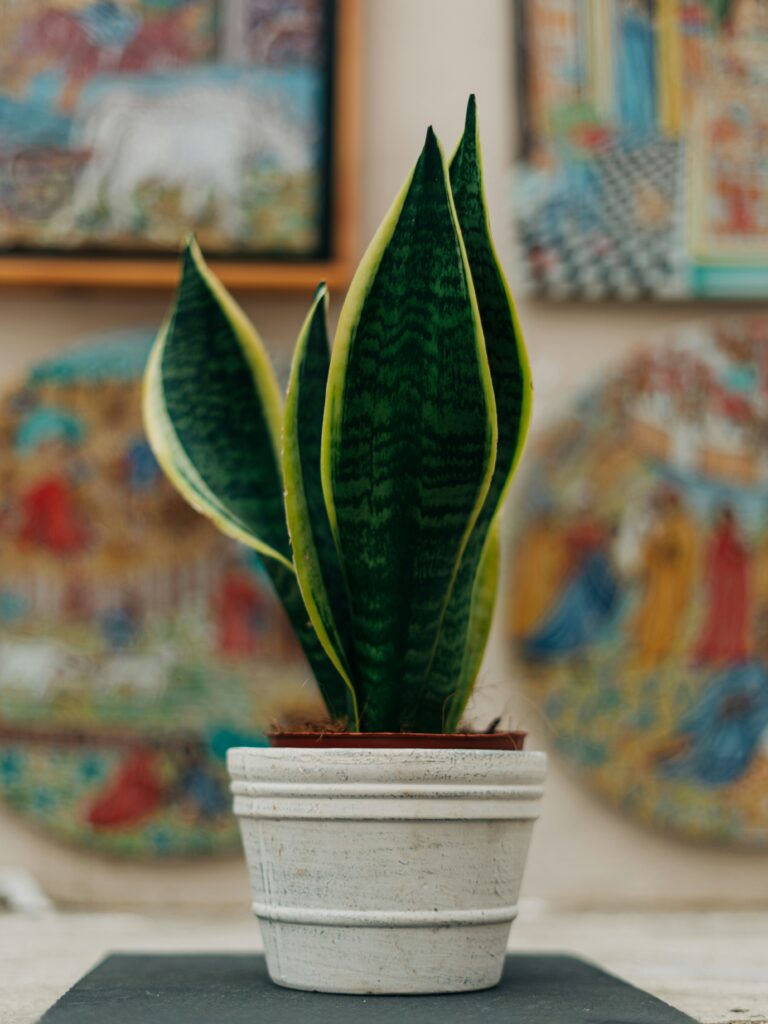
(Know about snake plant care guide) The Snake Plant (botanically known as Dracaena trifasciata, formerly Sansevieria trifasciata) is one of the most popular, resilient, and beginner-friendly houseplants in the world. Often called “Mother-in-Law’s Tongue” due to its sharp, sword-like leaves, it is native to tropical West Africa. Snake Plant is also Best for Indoor Plants.
Note on Genus Name: Historically classified under the genus Sansevieria, genetic testing led botanists to reclassify snake plants under the genus Dracaena.
Botanical Classification
- Family:Asparagaceae (the Asparagus family)
- Subfamily: Nolinoideae
- Class: Liliopsida (Monocotyledons / Monocots)
Full Taxonomic Breakdown
| Rank | Taxon |
| Kingdom | Plantae (Plants) |
| Clade | Angiosperms (Flowering plants) |
| Clade | Monocots |
| Class | Liliopsida |
| Order | Asparagales |
| Family | Asparagaceae |
| Genus | Dracaena |
| Species | D. trifasciata |
NASA Air Purification Myths vs. Real-World Facts
Do snake plants purify indoor air? While snake plants absorb toxins like benzene and formaldehyde in sealed laboratory chambers, a single plant in a standard home offers minimal air purification. To achieve measurable VOC reduction, you need 10 to 15 mature plants per 100 square feet. However, snake plants use CAM photosynthesis to release oxygen at night, making them ideal bedroom plants.
Snake plants utilize Crassulacean Acid Metabolism (CAM). Unlike most houseplants that open their stomata during the day to absorb carbon dioxide, CAM plants absorb CO2 and release oxygen at night to prevent moisture loss during hot hours.
Quick Care Matrix
| Care Element | Ideal Condition | Critical Error to Avoid |
| Light | Bright, indirect light (tolerates low light) | Direct midday sun without a 10-day acclimation |
| Watering | Allow soil to dry 100% from top to bottom | Calendar based watering routine |
| Soil Mix | Fast-draining succulent substrate | Standard moisture-retentive potting soil |
| Temperature | 65°F–85°F (18°C–29°C) | Exposure to cold drafts below 50°F (10°C) |
| Toxicity | Toxic to dogs and cats (saponins) | Placing within reach of foliage-chewing pets |
2. Ideal Growing Conditions (The Science of Prevention)
Lighting: Survival vs. Thriving
Snake plants are built to survive neglect, but their growth habit changes based on light exposure:
- Low Light (North-facing windows, interior corridors): The plant survives, but growth stalls, leaf patterns fade, and soil moisture takes weeks to evaporate—exponentially increasing root rot risk.
- Bright, Indirect Light (East or West-facing windows): Ideal growing conditions. Produces sturdy upright leaves, vivid yellow margins, and thick rhizome development.
- Direct Sun (South-facing windows): Unprotected direct midday sun bleaches leaf pigmentation and causes sunken, papery brown sun-scald patches.
Soil Mechanics & Potting Selection
Standard potting mixes retain too much water, suffocating root structures. To prevent tissue breakdown, use a custom porous mix.
The Ideal DIY Soil Recipe
- 50% Quality Indoor Potting Base (anchors roots and supplies trace minerals)
- 30% Perlite or Pumice (creates air pockets for root respiration)
- 20% Coarse Horticultural Sand or Fine Lava Rock (prevents soil compaction over time)
Pot Material Comparison
- Terracotta (Unglazed Clay): Best choice. Wicks moisture through its porous walls, helping soil dry uniformly.
- Plastic & Glazed Ceramic: Moisture stays trapped longer. If using these materials, extend the interval between waterings and confirm the pot has multiple functional drainage holes.
The “Soak and Dry” Watering Protocol
Never water on a fixed schedule. Environmental variables like ambient humidity, pot material, and temperature dictate moisture evaporation.
- Test Soil Moisture: Insert a wooden skewer down to the bottom of the pot. If it emerges with damp soil particles attached, hold off on watering.
- Soak Thoroughly: Drench the soil evenly until water streams freely from the drainage holes.
- Drain Completely: Allow the pot to drip for 15 minutes. Empty the drainage saucer completely—never let the base sit in standing water.
- Seasonal Adjustments: Reduce watering frequency significantly during winter dormancy, as metabolic activity drops.
3. Visual Diagnostic Guide: Fixing Common Snake Plant Issues
Symptom Diagnostic Matrix
| Visual Symptom | Root Cause | Immediate Action Required |
| Mushy, translucent yellow leaves | Overwatering / Fungal rot | Stop watering; unpot to inspect and prune rotted roots. |
| Wrinkled, thin, folding foliage | Prolonged underwatering | Perform a full bottom-soak rehydration. |
| Leaves falling over or bending | Insufficient light + excess water | Move to brighter indirect light; trim unsalvageable leaves. |
| Bleached or pale white patches | Direct solar scorch | Move plant 3–5 feet back from direct sun exposure. |
Emergency Protocol: Root Rot Recovery Surgery
When roots turn black, soft, and foul-smelling from overwatering, immediate intervention is required to save the main plant.
1.Unpot and Clear Soil Matrix: Perform over a clean workspace to avoid spreading fungal spores.
Gently ease the plant out of its pot. Wash away wet soil under lukewarm tap water to clearly reveal the underlying root system and rhizomes.
2.Surgically Prune Decay: Sanitize shears with 70% isopropyl alcohol between cuts.
Cut away all mushy, dark roots back to firm, healthy white or pink tissue. Excise soft or decaying leaves directly at their point of attachment on the rhizome.
3.Treat and Callous Wounds: Natural antifungal application prevents secondary infections.
Dust all open cut surfaces with ground cinnamon or horticultural sulfur powder. Place the plant in a dry, shaded area for 24–48 hours to allow cut edges to form a protective callous.
4.Repot Into Dry Substrate: Use a completely fresh, sterile pot and soil mix.
Plant into a well-draining terracotta pot filled with fresh succulent mix. Do not water for 10–14 days to give severed roots time to heal without fungal pressure.
4. How to Propagate Snake Plants

Method 1: Rhizome Division (Preserves Leaf Variegation)
Tip: If you want new plant offsets to retain yellow edges (like ‘Laurentii’ or ‘Gold Flame’), you must propagate by division. Leaf cuttings break the chimera pattern, causing new growth to revert to solid green.
  Parent Snake Plant
   ├── Leaf Cluster A (with healthy roots)  ──> Pot separately
   ├── Underground Rhizome (Cut cleanly here)
   └── Leaf Cluster B (with healthy roots)  ──> Pot separately
- Remove the parent plant from its container during spring repotting.
- Locate the thick underground stem (rhizome) connecting leaf clusters.
- Slice through the rhizome using a sterilized knife, ensuring each division retains at least one leaf cluster and intact roots.
- Repot each division into fresh succulent mix and hold water for one week.
Method 2: Leaf Cuttings in Water
Water propagation is visual and simple, but remember that variegated cultivars will lose their yellow margins using this method.
- Cut a healthy, mature leaf near its base using sterile shears.
- Cut an inverted “V” notch at the bottom tip. This increases the surface area for root growth and prevents the cut face from sealing against the container bottom.
- Allow the cutting to callous in a dry spot for 48 hours.
- Submerge the bottom inch in clean, room-temperature water. Refresh the water weekly. Roots will form within 4 to 8 weeks.
5. Popular Cultivars & Varieties
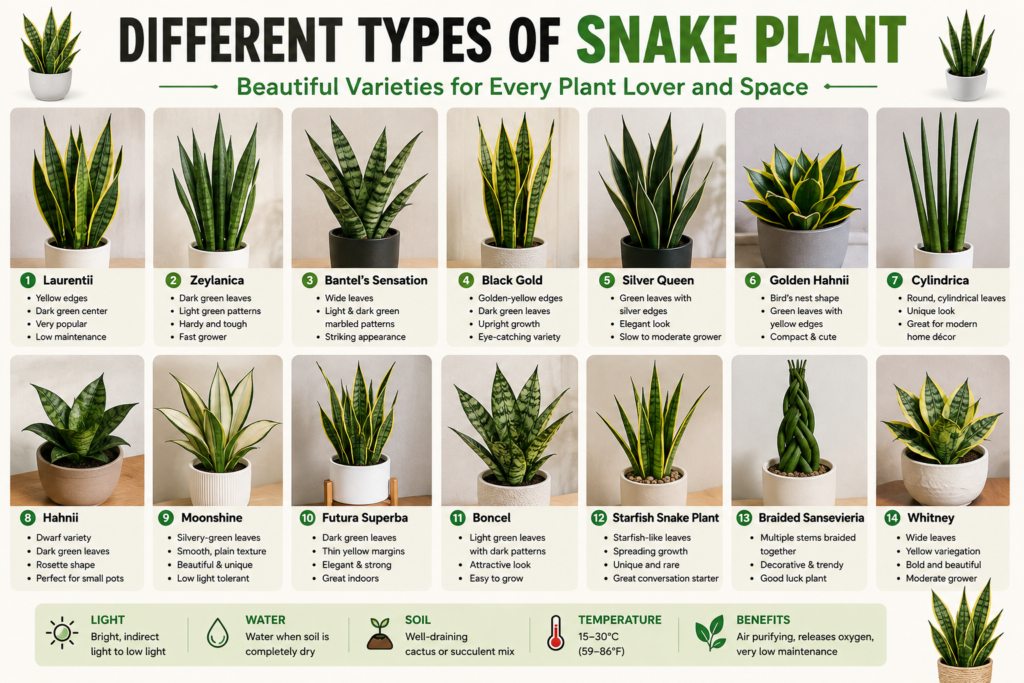
- Dracaena trifasciata ‘Laurentii’: The quintessential variety, recognizable by its upright dark green leaves edged with vivid gold margins.
- Dracaena trifasciata ‘Zeylanica’: Features dense, horizontal cross-bands of light and deep olive green without bright margins.
- Dracaena trifasciata ‘Hahnii’ (Bird’s Nest): A compact rosette cultivar reaching only 6–8 inches tall, making it ideal for desk displays.
- Dracaena trifasciata ‘Moonshine’: Highly sought-after variety featuring broad, pale silvery-green leaves with subtle dark green margins.
6. Frequently Asked Questions (FAQ)
How often should I water my snake plant in winter?
Reduce watering to once every 4 to 8 weeks in winter. The combination of lower light levels, cooler temperatures, and plant dormancy drastically reduces water absorption. Always confirm the soil is 100% dry before adding water.
Why did my leaf cuttings lose their yellow borders?
Yellow edges on variegated varieties are caused by a specific genetic chimera present only in the plant’s rhizome tissue. Propagating via leaf cuttings bypasses this layer, causing new shoots to revert to the solid green wild-type pattern.
Are snake plants safe for homes with pets?
No. Snake plants contain natural defense compounds called saponins. If ingested by cats or dogs, saponins cause nausea, drooling, vomiting, and diarrhea. Keep plants safely out of reach of curious pets.
Do snake plants flower?
When mature and placed in bright light—especially if slightly root-bound—a snake plant may produce a tall central stalk bearing clusters of sweet-smelling, sticky cream flowers that bloom at night.
Read about How to Protect Balcony Plants from Excess Rain: The Complete Survival Guide – knowabteverything
15 Plants Identification Helpful for Skin: Dermatologist Safety Guide
Top 10 Rainy Season Flowering Plants – knowabteverything
6 methods to cure your Sick Plants at home. – knowabteverything
What Is Root Rot? Fix Your Damage Plants Roots – knowabteverything
How to fix damage Plants Leaves which Turn Yellow? 6 Simple Steps






One Comment