Best Soil Containers for Gardens and home plants
Best Soil Containers for Gardens and home plants What is the best lightweight potting soil for container gardens? The best lightweight potting soil for container gardens is a soilless blend made of coconut coir or sphagnum peat moss combined with perlite, pumice, or rice hulls.
If you have ever dragged a 40-pound bag of topsoil up three flights of stairs—or worried whether a massive ceramic planter might strain your balcony railing—you already know the primary drawback of traditional gardening: weight.
Standard garden soil and dense commercial mixes work fine in ground beds, but in containers, they create structural risks, strain your back, and choke plant roots through compaction.
Lightweight potting soils solve these issues. By replacing heavy minerals with porous, airy media, you create an ideal environment for roots while keeping your pots easy to move. In this guide, we evaluate top commercial soils, analyze dry versus saturated weights, share custom recipes, and fix common lightweight soil challenges.
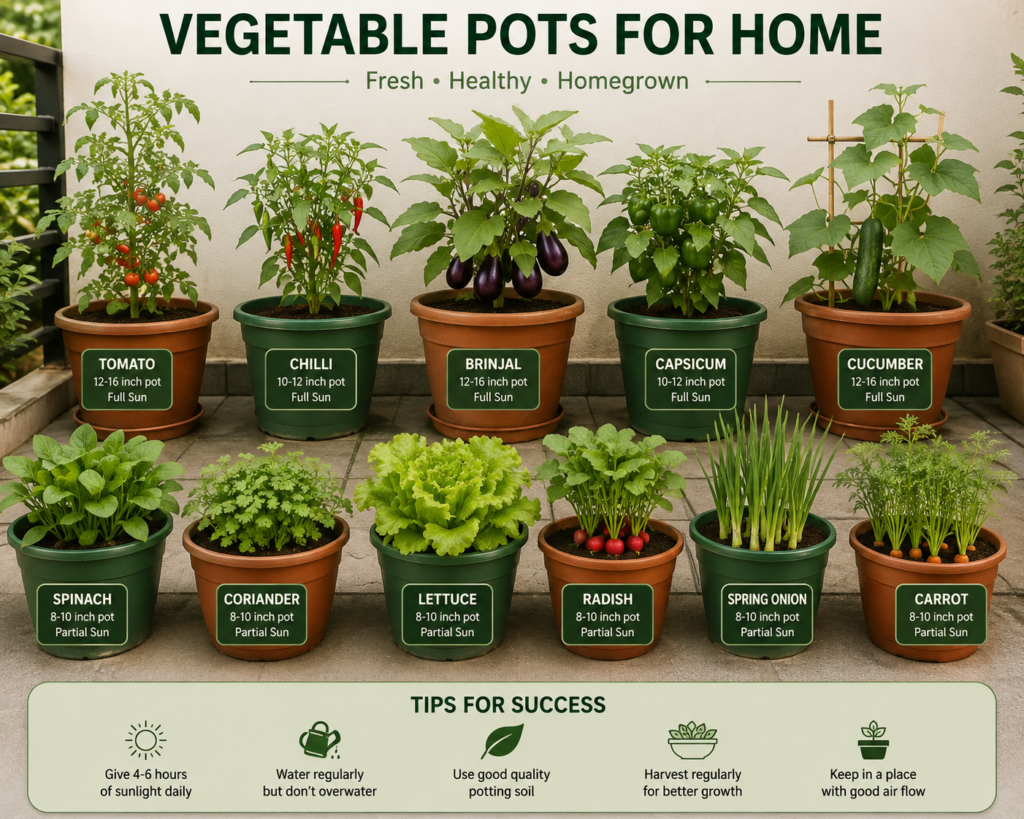
Quick Comparison: Top Lightweight Potting Soils
| Brand / Product Name | Key Base Ingredients | Ideal Container Type | Standout Feature | Approx. Dry Weight (per Cu. Ft.) |
| FoxFarm Happy Frog | Aged forest products, Sphagnum peat, Perlite | Large Patio Pots & Balconies | Inoculated with mycorrhizae and earthworm castings | $\sim 22.5\text{ lbs}$ |
| Pro-Mix HP Mycorrhizae | Sphagnum peat ($75\text{–}85\%$), Coarse Perlite | Elevated Planters & Large Pots | High porosity ($12\text{ lbs/cu. ft.}$ dry); resists overwatering | $\sim 12.0\text{ lbs}$ |
| Burpee Organic Premium Mix | Coconut Coir, Compost, Water-retaining granules | Hanging Baskets, Window Boxes | Holds moisture without sagging under weight | $\sim 15.0\text{ lbs}$ |
| Wonder Soil Organic Coco Coir | Compressed Coco Coir, Worm Castings, Kelp | Urban Balconies & Small Spaces | Expands $7\times$ with water; ultra-compact storage | $\sim 8.0\text{ lbs}$ |
| Espoma Organic Potting Mix | Sphagnum peat, Earthworm castings, Perlite | Herbs, Flowers, & Vegetables | Pre-buffered pH with balanced organic nutrients | $\sim 18.0\text{ lbs}$ |
What Makes Soil “Lightweight”? (Dry vs. Wet Weight Explained)
Understanding lightweight soil requires knowing the difference between dry weight and saturated weight. A bag of potting media might feel featherlight on the shelf, but once you thoroughly water your container, that weight increases significantly.
The Hidden Trap: Saturated Weight
Standard topsoil consists of sand, silt, and heavy clay particles. When water fills the air gaps in topsoil, it becomes dense mud.
By contrast, lightweight potting soils are soilless mixes. They rely on highly porous materials that absorb water internally while keeping structural air pockets open. Even when fully saturated, a soilless blend weighs a fraction of traditional topsoil.
                        SOIL WEIGHT COMPARISON (WET)
+-----------------------------------------------------------------------+
| Topsoil (Wet)          [====================================] 110 lbs/cu.ft.|
| Standard Mix (Wet)     [=================] 50 lbs/cu.ft.                |
| Light Soilless (Wet)   [===========] 34 lbs/cu.ft.                      |
| Ultra-Light (Wet)      [=======] 22 lbs/cu.ft.                        |
+-----------------------------------------------------------------------+
Weight Comparison Chart
| Medium / Mix Type | Approx. Dry Weight (per Cu. Ft.) | Approx. Wet Weight (per Cu. Ft.) | Structural Load Risk |
| Standard Topsoil / Garden Soil | $75\text{–}90\text{ lbs}$ | $100\text{–}120+\text{ lbs}$ | High (Never use in containers) |
| Standard Commercial Potting Mix | $25\text{–}35\text{ lbs}$ | $45\text{–}55\text{ lbs}$ | Moderate (Fine for ground-level pots) |
| Lightweight Soilless Blend | $12\text{–}18\text{ lbs}$ | $28\text{–}38\text{ lbs}$ | Low (Ideal for balconies & decks) |
| Ultra-Light Expanded Mix | $8\text{–}14\text{ lbs}$ | $20\text{–}26\text{ lbs}$ | Very Low (Best for hanging baskets) |
Pro Tip: Need to verify if your mix is holding too much water? Push a wooden dowel or chopstick down into the center of the pot for 10 seconds. If it pulls up dark, heavy soil cling, your mix lacks sufficient aeration media like perlite.
Essential Ingredients in Lightweight Soil
- Coconut Coir: Made from processed coconut husks, coir holds up to 10 times its weight in water, re-wets easily, and maintains a neutral pH ($5.8\text{–}6.8$).
- Sphagnum Peat Moss: A classic lightweight base that retains nutrients, though it requires a wetting agent when bone-dry.
- Perlite: Volcanic glass heat-expanded into white, popcorn-like nuggets. It adds structural air pockets without adding measurable weight.
- Pumice: A slightly heavier volcanic stone that does not float to the surface like perlite, making it ideal for tall planters needing base stability.
- Expanded Rice Hulls: A sustainable alternative to perlite that provides aeration while slowly breaking down into plant-available silica.
- Vermiculite: A naturally expanded silicate mineral that holds water and nutrients like a sponge, perfect for moisture-loving plants.
Top 5 Commercial Lightweight Potting Soils
1. FoxFarm Happy Frog – Best Overall Lightweight Blend
FoxFarm Happy Frog balances lightweight aeration with organic nutrients. It uses a base of fine sphagnum peat moss and perlite, enhanced with earthworm castings, bat guano, and beneficial mycorrhizal fungi.
- Key Ingredients: Fine Sphagnum Peat Moss, Perlite, Earthworm Castings, Bat Guano, Mycorrhizae.
- Pros: Excellent root development; pre-buffered pH ($6.3\text{–}6.8$); stays aerated over a full growing season.
- Cons: Higher cost per cubic foot than commodity brands.
- Best Suited For: Fruiting container vegetables (tomatoes, peppers) and large patio planters.
2. Pro-Mix HP Mycorrhizae – Best High-Porosity Soil
“HP” stands for High Porosity. Pro-Mix HP is designed specifically for growers who want maximum drainage and fast root expansion without extra weight.
- Key Ingredients: Peat Moss ($75\text{–}85\%$), Coarse Perlite, Dolomitic Limestone, Mycorrhizae.
- Pros: Extremely lightweight ($12\text{ lbs/cu. ft.}$ dry); makes overwatering nearly impossible.
- Cons: Dries out rapidly in hot weather; requires frequent fertilizing.
- Best Suited For: Rooftop gardens, elevated beds, and moisture-sensitive succulents or herbs.
3. Burpee Organic Premium Mix – Best for Hanging Baskets
Hanging baskets dry out quickly from wind exposure, but heavy soils snap mounting hardware. Burpee solves this by combining organic coconut coir with water-retaining ingredients.
- Key Ingredients: Coconut Coir, Organic Compost, Plant Food.
- Pros: Retains moisture better than pure peat; OMRI-listed for organic gardening.
- Cons: Can retain too much water if used in unvented plastic pots.
- Best Suited For: Hanging baskets, window boxes, and high-wind balconies.
4. Wonder Soil Organic Coco Coir – Best Eco-Friendly & Compact Option
Wonder Soil arrives as compressed, dry wafers. When you add water, it expands up to seven times its original volume, making it easy to carry home or store in small apartments.
- Key Ingredients: Compressed Coco Coir, Worm Castings, Kelp, Mycorrhizae, Perlite.
- Pros: Zero heavy lifting; easy to store; made from renewable coconut husks.
- Cons: Requires pre-soaking in a separate bucket before filling pots.
- Best Suited For: Apartment renters, mobility-conscious gardeners, and small balconies.
5. Espoma Organic Potting Mix – Best Value All-Purpose Mix
Espoma offers a consistent blend of peat, perlite, and organic amendments that yields a lightweight mix suitable for most plant types.
- Key Ingredients: Sphagnum Peat Moss, Processed Forest Products, Perlite, Earthworm Castings.
- Pros: Widely available; rich organic starter feed included; stable moisture control.
- Cons: Contains slightly more forest product fines, making it marginally denser than pure HP mixes.
- Best Suited For: Mixed flower containers, potted herbs, and indoor houseplants.
How to Make DIY Lightweight Potting Soil (3 Custom Recipes)
Making your own lightweight soil saves money and allows you to adjust moisture levels for your specific climate.
Safety Warning: Wear an N95 dust mask when handling dry perlite, vermiculite, or peat moss to prevent inhaling airborne mineral dust.
TYPICAL BALCONY VEGGIE MIX RATIOS
[40%] Coconut Coir / Peat Moss
[30%] High-Grade Compost / Castings
[20%] Coarse Perlite
[10%] Rice Hulls or Pumice
Recipe 1: The Balcony Vegetable & Tomato Blend
Container vegetables need steady moisture and nutrients, but they still require an airy structure for deep root expansion.
- 4 Parts Coconut Coir or Peat Moss (Base Structure)
- 3 Parts Quality Compost or Earthworm Castings (Nutrients)
- 2 Parts Coarse Perlite (Aeration)
- 1 Part Expanded Rice Hulls or Pumice (Drainage)
- Bonus: Add $0.5\text{ cups}$ of balanced, slow-release organic fertilizer per 5 gallons of mix.
Recipe 2: The Ultra-Light Hanging Basket & Flower Mix
Hanging pots need maximum weight reduction along with steady moisture retention to prevent flower wilt.
- 5 Parts Sphagnum Peat Moss or Coir
- 3 Parts Medium Vermiculite (Retains moisture without adding heavy mass)
- 2 Parts Perlite (Creates air channels)
Recipe 3: The Acid-Loving Container Mix (Blueberries, Azaleas)
Plants like blueberries, strawberries, and azaleas require a low pH ($4.5\text{–}5.5$) alongside light, fluffy soil.
- 5 Parts Sphagnum Peat Moss (Naturally acidic base)
- 3 Parts Aged Pine Bark Fines
- 2 Parts Perlite
- Note: Avoid adding lime or wood ash to this mix, as both raise soil pH.
Critical Challenges of Lightweight Soil (And How to Fix Them)
PROBLEM                                FIX
+--------------------------+           +--------------------------+
| Water Runs Down Sides    |  ====>    | Warm Soaking + Yucca     |
+--------------------------+           +--------------------------+
| Tall Plant Tips Over     |  ====>    | Clay Pebbles at Base     |
+--------------------------+           +--------------------------+
| Nutrients Leach Out      |  ====>    | Bi-Weekly Liquid Feeding |
+--------------------------+           +--------------------------+
1. Fixing Hydrophobic Soil (When Water Runs Straight Down the Sides)
When peat-based soil dries out completely, it becomes hydrophobic—repelling water like oil. Water runs down the inner edges of the pot, leaving the core root ball dry.
- The Quick Fix: Use warm water ($90\text{–}100^\circ\text{F}$) to break surface tension faster. For small containers, place the pot in a tub filled with $2\text{–}3\text{ inches}$ of warm water for 30 minutes (bottom-watering).
- The Long-Term Fix: Mix a few drops of organic yucca extract into your watering can. Top-dressing pots with a $1\text{-inch}$ layer of organic mulch also prevents surface crusting.
2. Anchoring Top-Heavy Plants in Light Soil
Tall crops like tomatoes, peppers, or dahlias can blow over in high winds when grown in fluffy, lightweight mixes.
- The Fix: Do not add heavy dirt to the bottom. Instead, place a $2\text{-inch}$ layer of LECA (Lightweight Expanded Clay Aggregate) at the base of the pot. These porous clay balls add stability at the bottom without exceeding balcony weight limits. Tie your plant stakes directly to the rim of the pot using container clips.
3. Nutrient Leaching and Fertilizer Schedules
Because lightweight media drain freely, water washes away soluble nutrients faster than in ground soil.
- The Fix: Mix a slow-release granular fertilizer into your soil at planting time. Once active growth begins in late spring, feed your plants every 10–14 days with a diluted organic liquid fertilizer (like fish emulsion or kelp meal).
Balcony & Deck Safety: Weight-Limit Calculations
If you garden on a wood deck, balcony, or rooftop, structural weight safety is essential.
Understanding Balcony Load Capacity
Most modern residential balconies are engineered for a live load of $40\text{ to }60\text{ lbs/sq. ft.}$ Older wooden decks may support less, especially if exposed to weather damage.
How to Calculate Fully-Watered Container Weight
Use this formula to calculate your total structural weight:
$$\text{Total Load} = \text{Pot Weight} + \text{Saturated Soil Weight} + \text{Mature Plant Weight}$$
Real-World Example:
- Large 15-Gallon Resin Planter: $4\text{ lbs}$
- 15 Gallons ($2\text{ cu. ft.}$) of Wet Lightweight Soil: $68\text{ lbs}$ ($\sim 34\text{ lbs/cu. ft.}$)
- Mature Tomato Plant with Fruit: $10\text{ lbs}$
- Container Base Footprint: $1.5\text{ sq. ft.}$
$$\text{Total Weight} = 4 + 68 + 10 = 82\text{ lbs}$$
$$\text{Load per Sq. Ft.} = \frac{82\text{ lbs}}{1.5\text{ sq. ft.}} = 54.6\text{ lbs/sq. ft.}$$
Verdict: This setup sits near the standard safe limit of $50\text{–}60\text{ lbs/sq. ft.}$ Using traditional topsoil in that same pot would weigh over $200\text{ lbs}$ ($133\text{ lbs/sq. ft.}$)—a serious structural hazard for a balcony.
Buyer’s Checklist: What to Look for at the Garden Center
Before buying commercial potting soil, run through this quick checklist:
- [ ] Read the Tag: Look for the phrase “Soilless Potting Mix” or “High Porosity (HP)” on the bag.
- [ ] The Squeeze Test: Squeeze the outside of the bag. It should feel springy and soft, not like a dense block of wet clay.
- [ ] Check the Base: Prioritize mixes using Coconut Coir or Sphagnum Peat Moss over unspecified “forest products” or “topsoil.”
- [ ] Look for Aeration: Ensure white perlite particles or rice hulls are visible throughout the mix.
- [ ] Check Nutrient Additives: Verify whether slow-release fertilizer is pre-mixed so you don’t over-feed young seedlings.
Frequently Asked Questions
Can I use regular garden soil in containers if I mix in perlite?
No. Native garden soil contains heavy clay, sand, and silt particles along with weed seeds and soil-borne pathogens. Adding perlite improves drainage slightly, but the clay particles will still compact in a closed pot, cutting off oxygen to the roots.
How often should I fertilize plants grown in lightweight potting soil?
Because soilless ingredients like peat and perlite contain few native nutrients, feed your plants every 2 to 3 weeks with a balanced liquid organic fertilizer during the growing season, or rely on a slow-release granular fertilizer mixed in at planting time.
Can I reuse lightweight potting soil for a second season?
Yes, if the previous plants were healthy. Remove old root masses, break up hardened clumps, and fluff the soil. Re-vitalize the mix by blending in 20–30% fresh compost or worm castings, along with an organic fertilizer. If plants suffered from fungal or bacterial diseases last year, discard the soil and start fresh.
Why is my lightweight potting soil blowing away in high winds?
When dry, perlite and fine peat moss are light enough to be swept up by strong wind gusts. Prevent this by top-dressing your pots with a $1\text{-inch}$ layer of organic mulch, coarse coco chips, or smooth river pebbles.
Is coconut coir lighter than peat moss?
Dry coconut coir and dry sphagnum peat moss weigh nearly the same per cubic foot. However, coconut coir re-wets much faster than peat moss, holds water more evenly, and maintains a stable neutral pH ($5.8\text{–}6.8$) without shrinking away from pot edges when dry.
you can buy from here Amazon.in : Potting Soil for Container Gardens
15 Plants Identification Helpful for Skin: Dermatologist Safety Guide
31 Balcony Railing Planter Ideas: The Complete Design Mounting & Safety Guide – knowabteverything
Which are the Best Organic Fertilizers for Indoor Plants? – knowabteverything
6 methods to cure your Sick Plants at home. – knowabteverything
One Comment